

Your class runs a company, round by round.
Caliber is a business simulation by Flex Labs for university and MBA students at business schools in the UAE, Egypt and Saudi Arabia. Students run a phone company in a 3D campus, round by round, in teams, single player or as a single-player assessment.
A company to run, in a campus you can see.
The campus has a design studio, a factory, a logistics yard and a market. A team has about thirty kinds of decision across eight departments, five of them every round, and the game ranks every team on the Stakeholder Score. You run it from the facilitator's workspace, close each round and present it from a report the game writes.
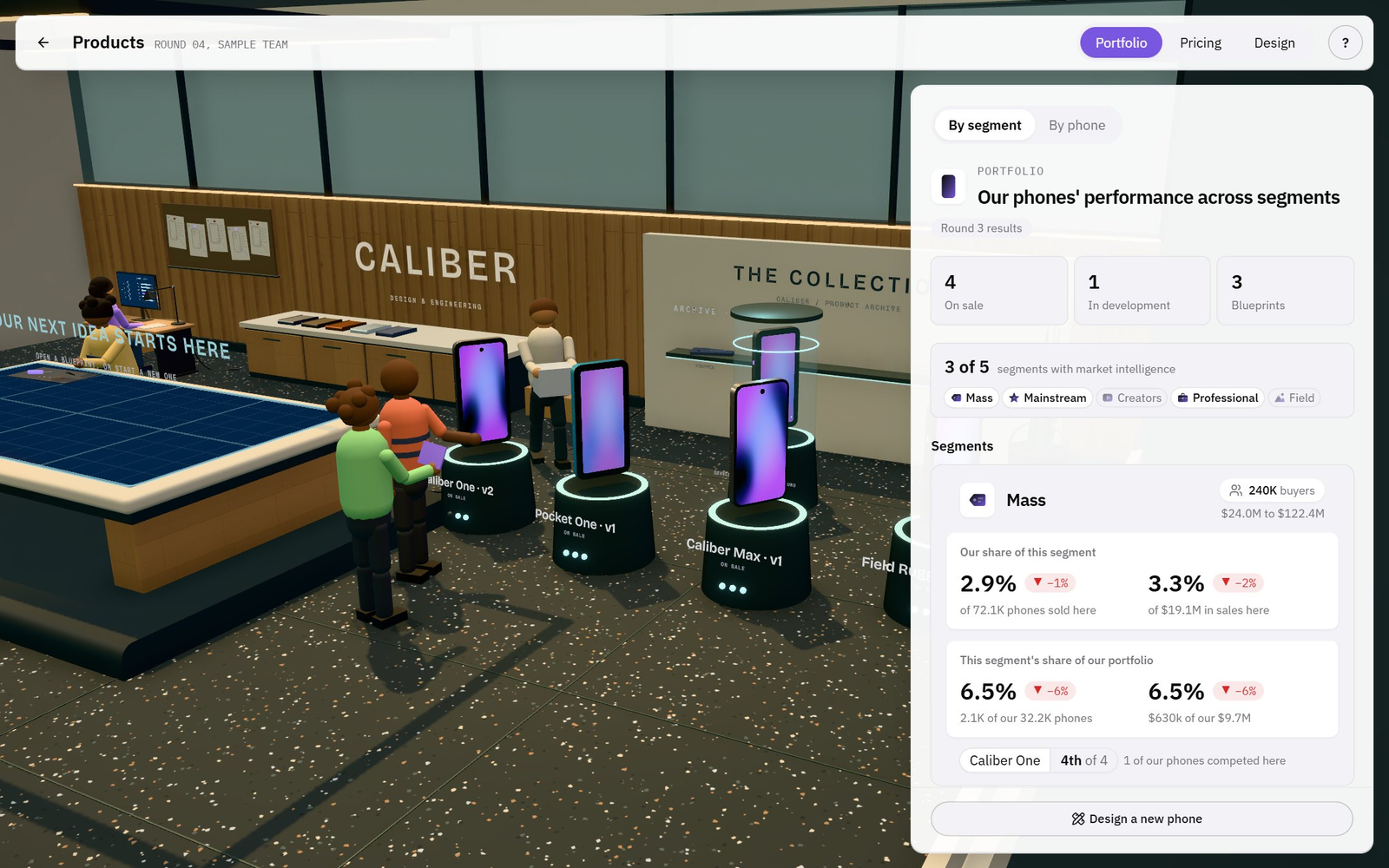
What students run
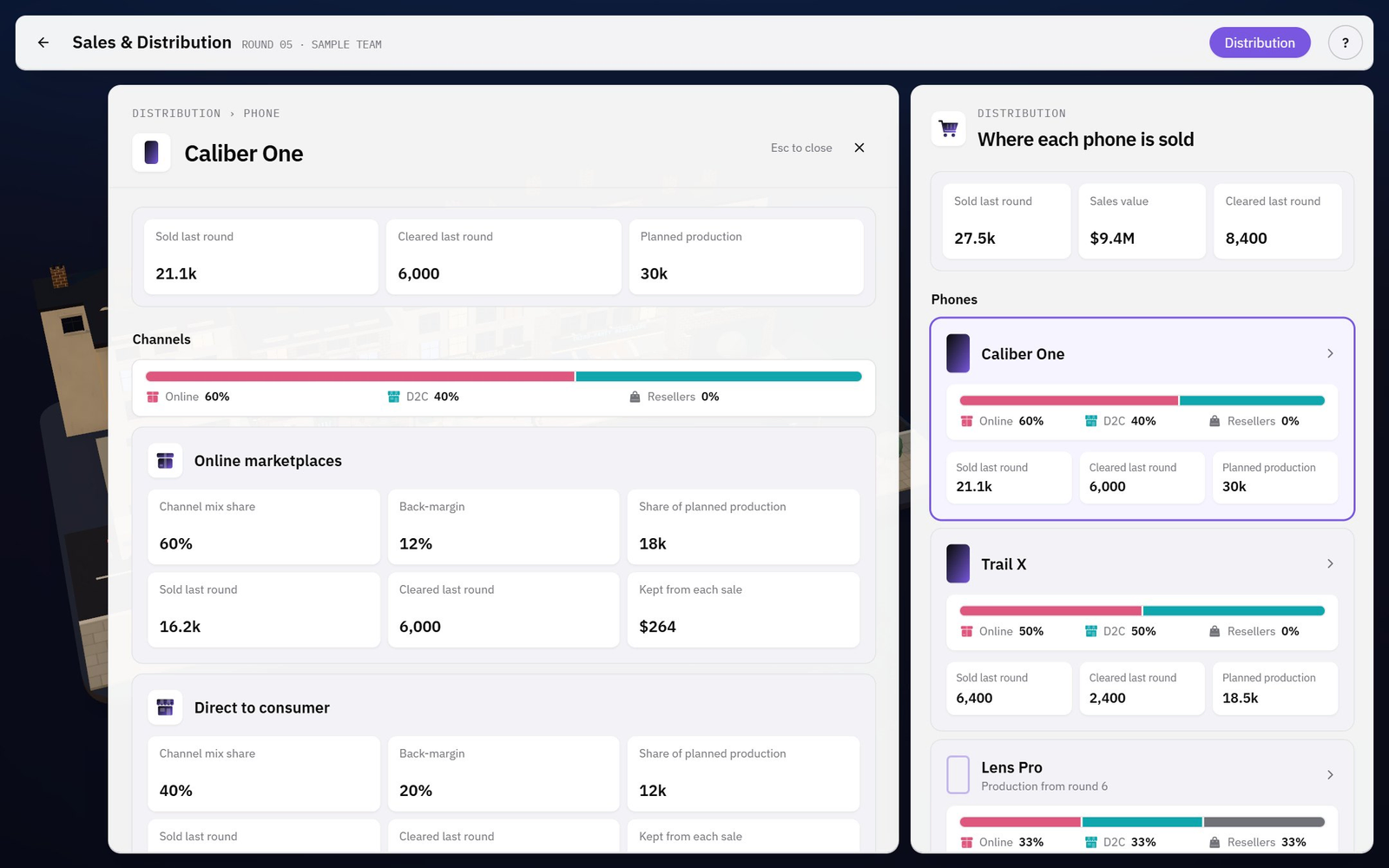
Products: The phones you sell, and their prices.Supply Chain: Where parts come from, and when.Factory: How much you build, and how well.Marketing: Campaigns and brand.Sales & Distribution: Where each phone is sold, and what channels keep.Finance: Where money comes from and goes.
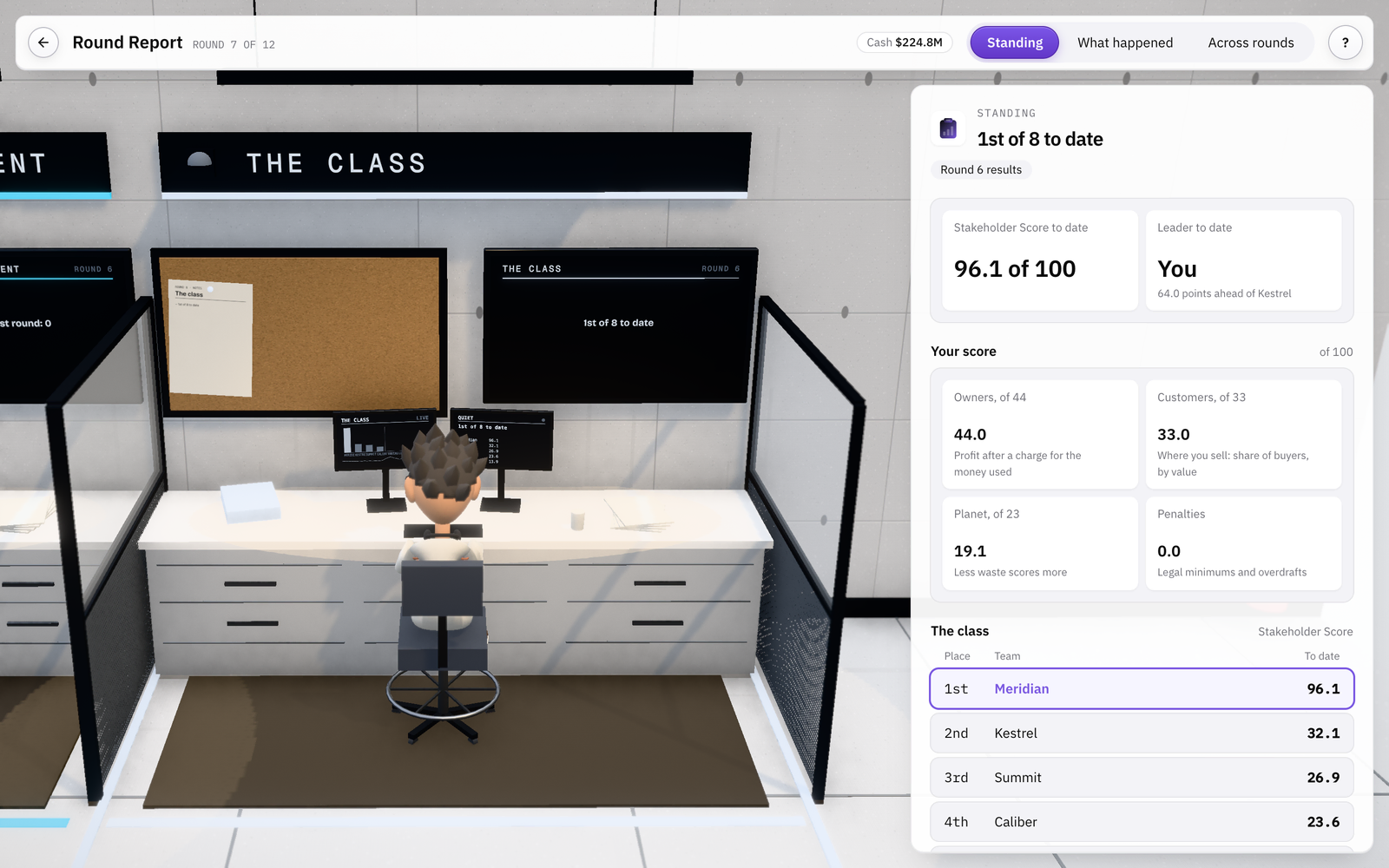
What comes back after every round
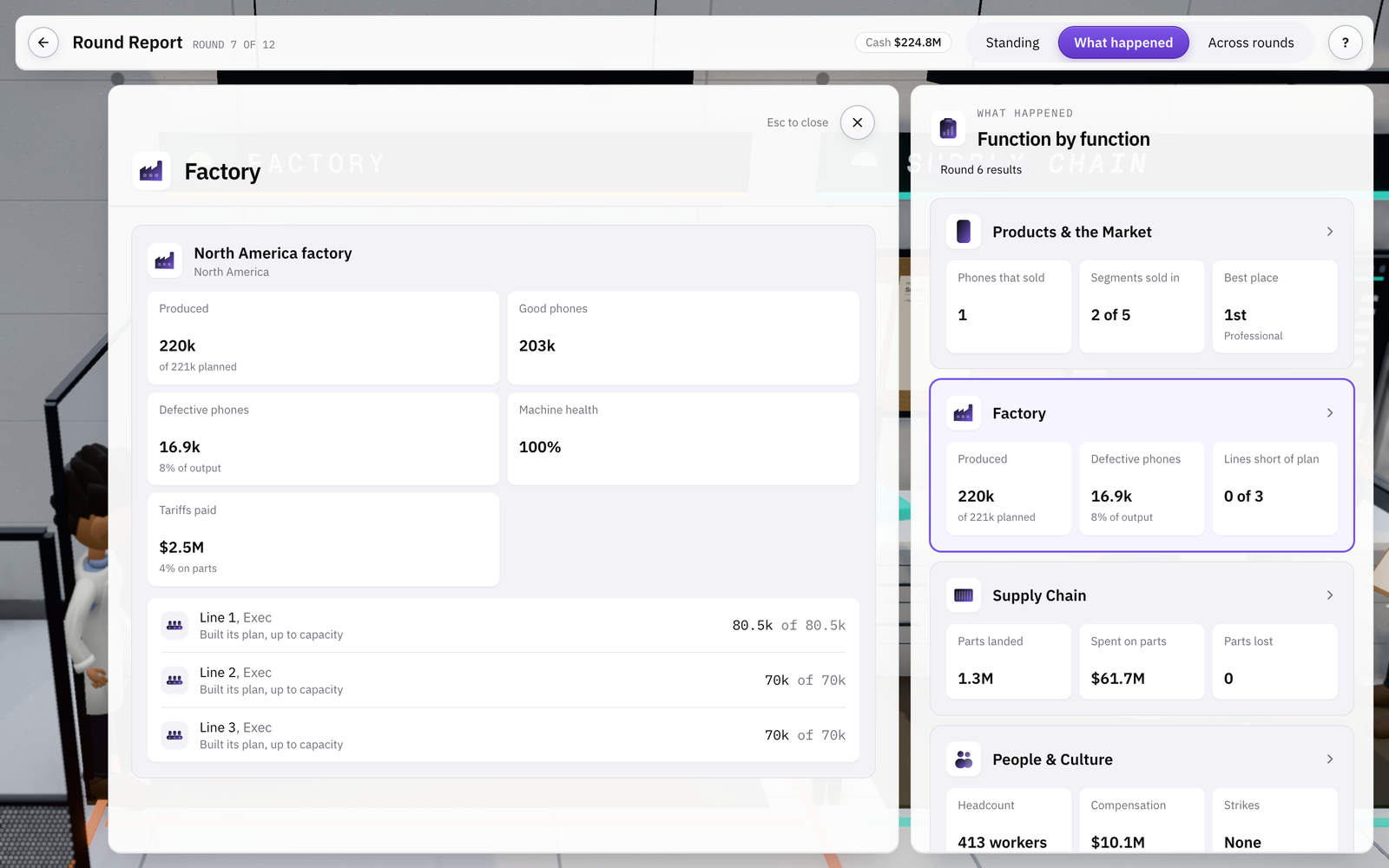
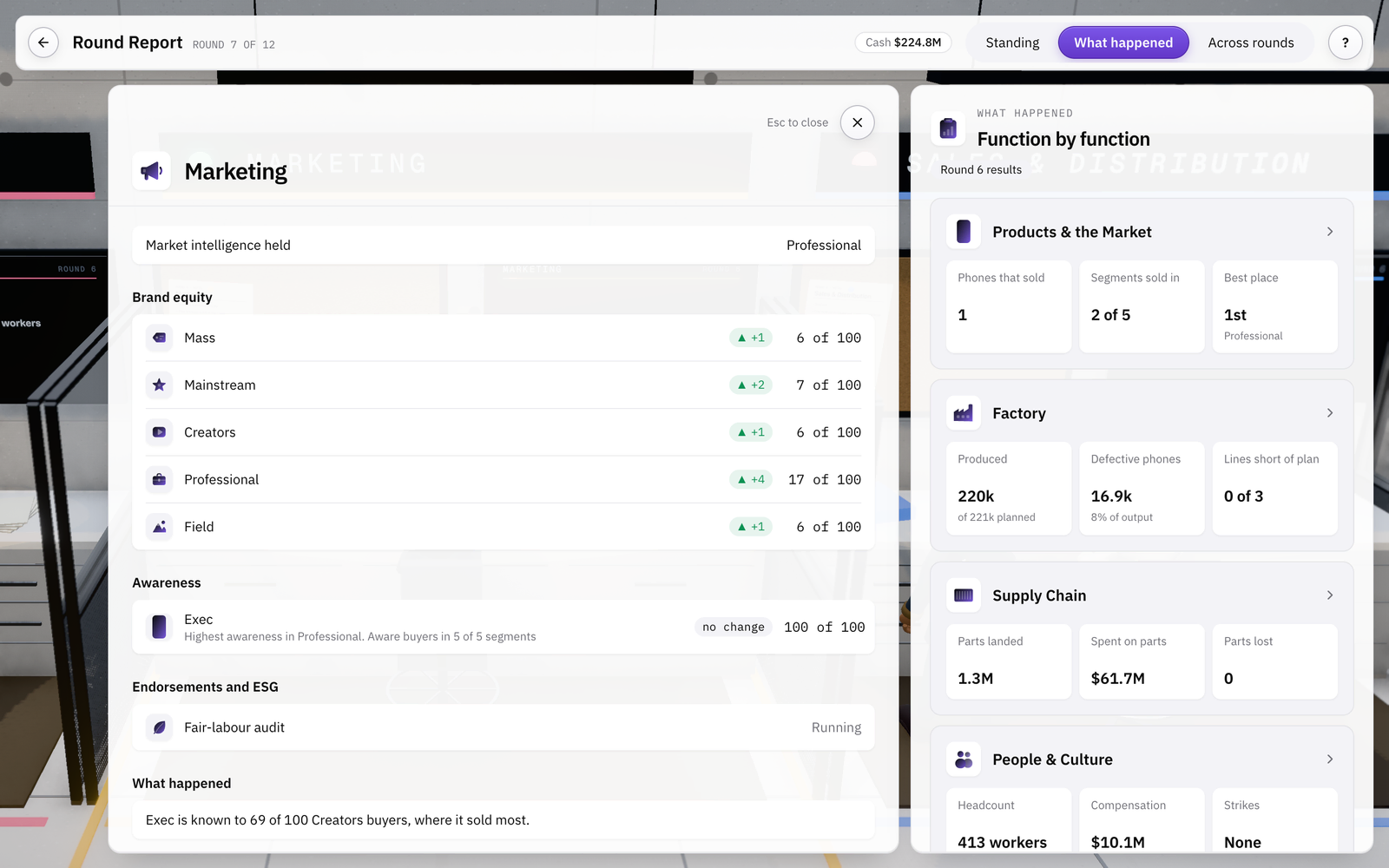
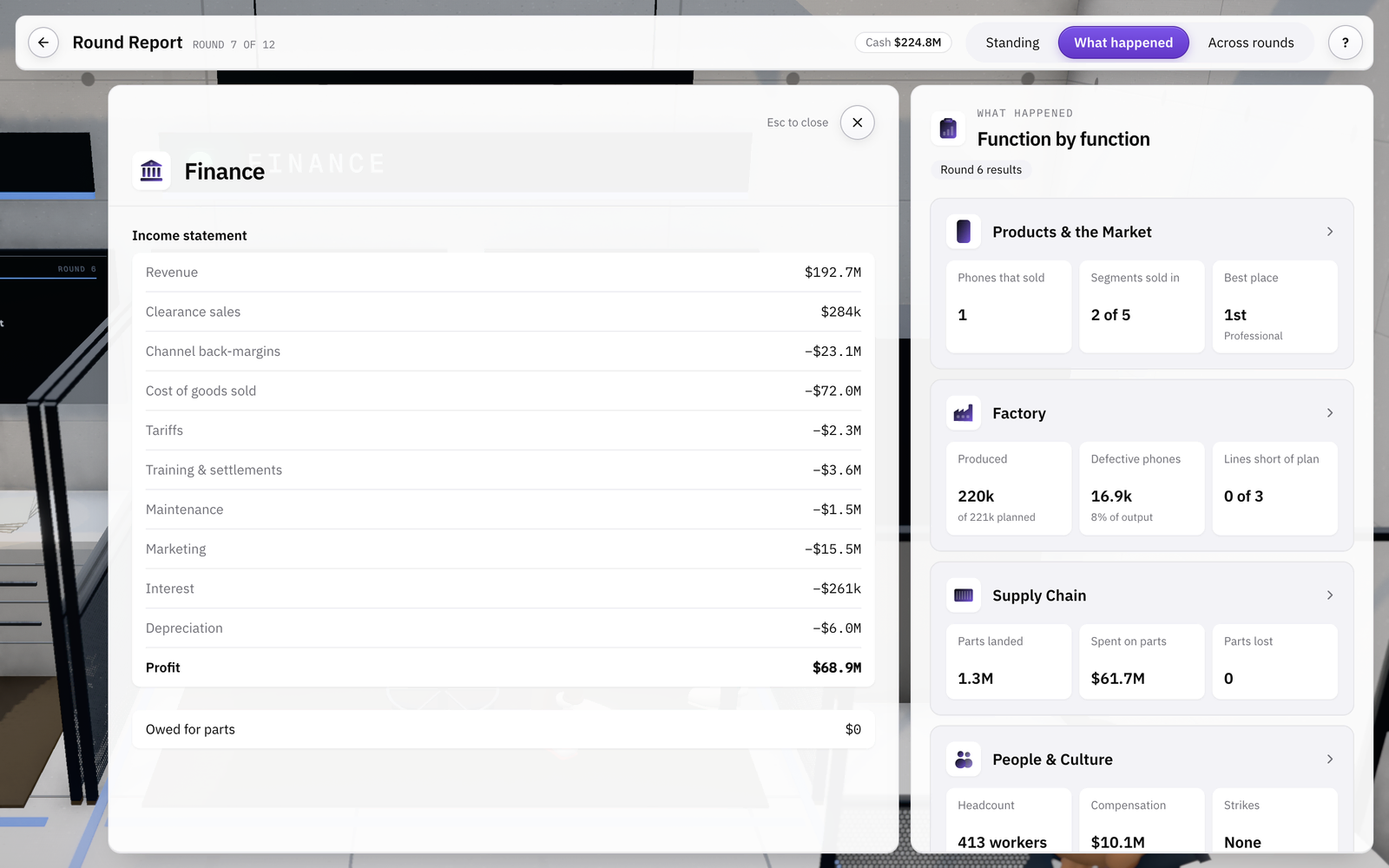
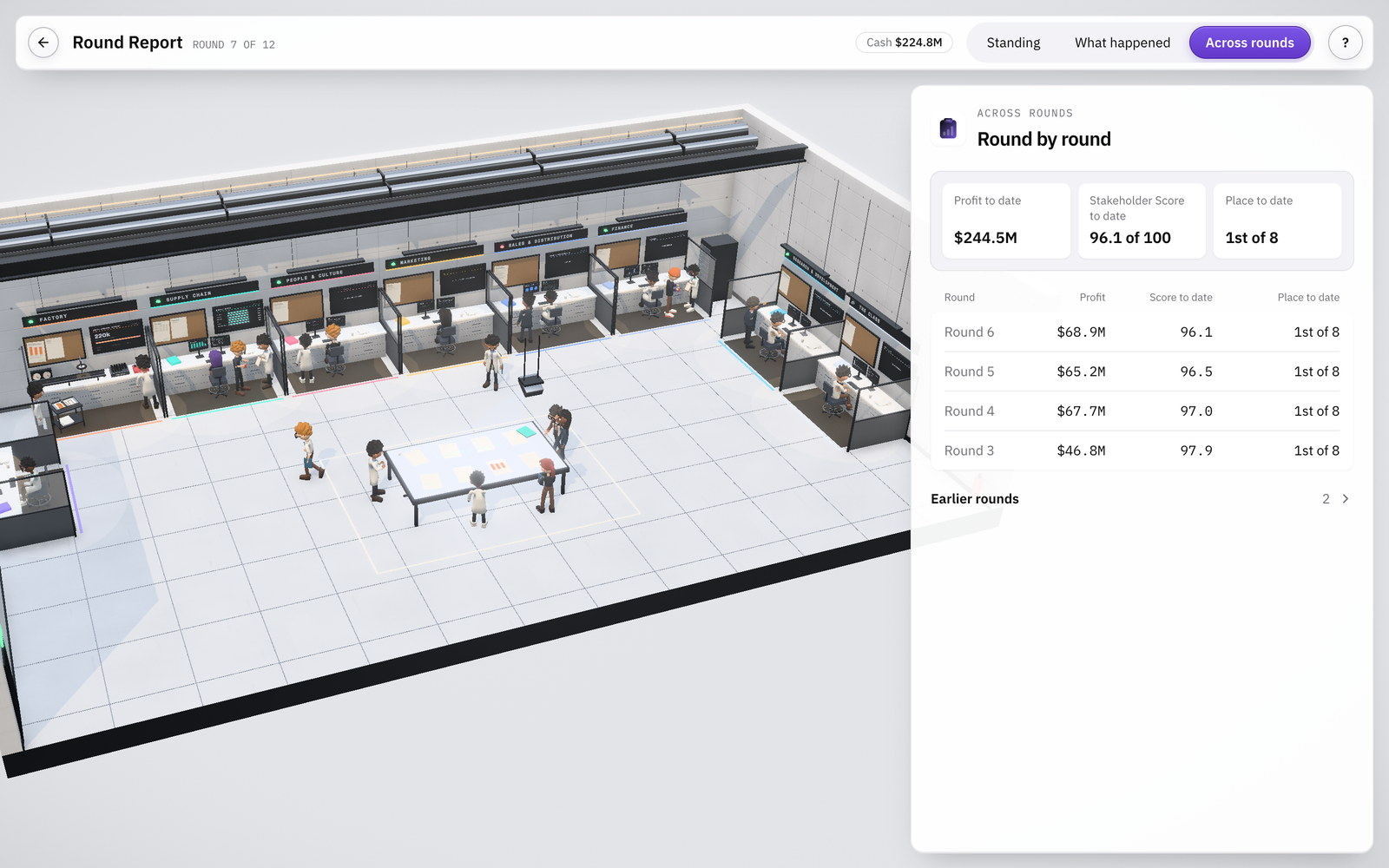
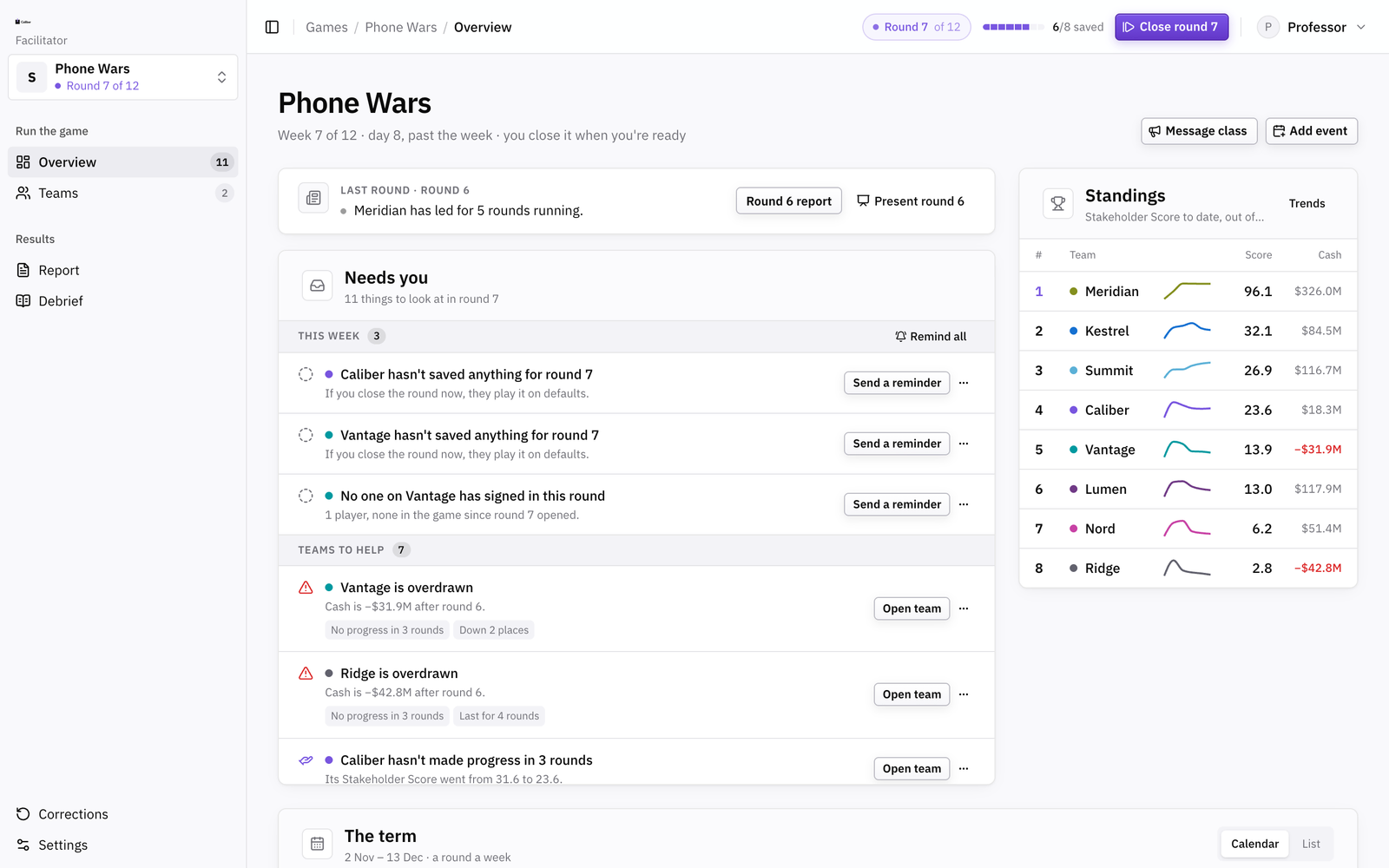
Standing: Where every team stands to date, ranked on the Stakeholder Score.What happened: The round function by function: phones sold, production, defects, parts landed and the People & Culture figures.Across rounds: Profit, the Stakeholder Score and place to date, round by round.The Overview: who needs you, the standings on the Stakeholder Score, and the term with its events.




Three ways to run it in your programme.
Assessment day
One day · about 3 to 5 rounds
Single player, against bot teams
Each student runs a company in a game of their own, against bot teams the game plays. Their score, the Round Report and every saved decision, with who made it and when, show how they decided. You set up each game the day before and close its rounds.
Best forA single session inside a wider course, or an individual assignment.
An intensive
2 or 3 days · about 6 to 10 rounds
In teams or single player
Teams or single players share one market, where what one company does moves the others' numbers. Several rounds a day, with a debrief after each close. You stay in the room and close each round as its session ends.
Best forA residency, a bootcamp, an orientation week or an executive short course.
A full course
A term · about 12 rounds, one a week
In teams or single player
Students play in teams or alone. Class opens with last round's report, and you close the round when the week ends. About half an hour to set up, then about an hour a week, mostly in class.
Best forA core course in strategy, operations, marketing or managerial finance, or a capstone.


What changes when the simulation is Caliber.
Most business simulations are played on decision screens, charts and tables, and often close a round at a set deadline. In Caliber the class runs its company in a 3D campus, and the facilitator closes each round when the class is ready.
| What changes | The usual simulation (Capsim, Cesim, GLO-BUS and The Business Strategy Game, Marketplace Simulations, Harvard Business Publishing, StratX, SmartSims) | Caliber |
|---|---|---|
| What students see | Decision screens, charts and tables. | A 3D campus with one building per department, such as the design studio and the factory, and the market across the water. |
| How a decision is made | Entered on screen, then submitted, usually by a deadline. | Saved as it is made, with no submit button. A team locks its round when it is ready, and the facilitator sees who has saved and locked, live. |
| How a round is closed | Often processed automatically at a deadline the instructor sets. | When you close it, from one dialog that shows who is ready and who plays on defaults. |
| What faculty get back | Reports after each round. Some products now draft a debrief too. | The round's report three ways, and a debrief to present in the browser as slides with speaker notes, or save as a PDF. |
| The score | Varies by simulation and by setup. | The Stakeholder Score: owners, customers and the planet, weighed the same way in every game. |
| Market shocks | Mostly built into the scenario. Some add a threat or a cost shock to later rounds. | Events you add while the game runs: demand, part prices, wages, tariffs or interest, each with your own number. |
| Setting up | Onboarding, a webinar or training from the maker. | About half an hour for a class game: rounds, cash, practice rounds, then every student by email. |
| Length | Often a different product or edition for each length. | A term, a few days or a day, from the same game. |
| Where the maker is | The US, Finland, France or New Zealand. | Dubai and Cairo: Flex Labs, for business schools in the UAE, Egypt and Saudi Arabia. |
