


Your students run a company at school.
Caliber is a business simulation by Flex Labs for secondary schools in the UAE, Egypt and Saudi Arabia, for grades 11 and 12. Students play in teams, single player or as an assessment, with a report each round.
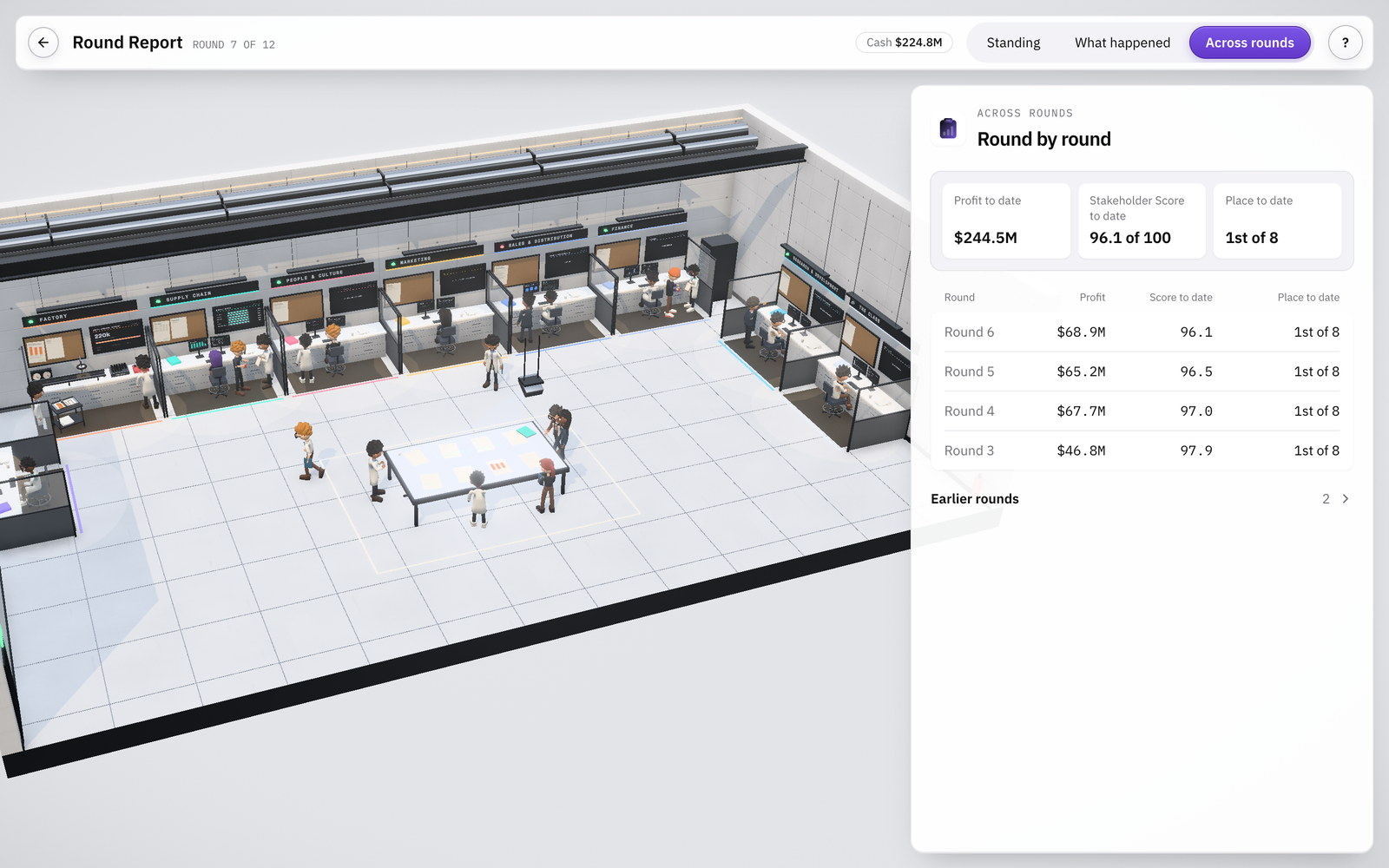
A company to run, in a campus they can see.
For grades 11 and 12, the last two years of high school, schools get the same game as the university version. Most decisions open in round 2, every department's screen has a guided tour and a short guide, and the teacher decides how long the game runs and closes each round.
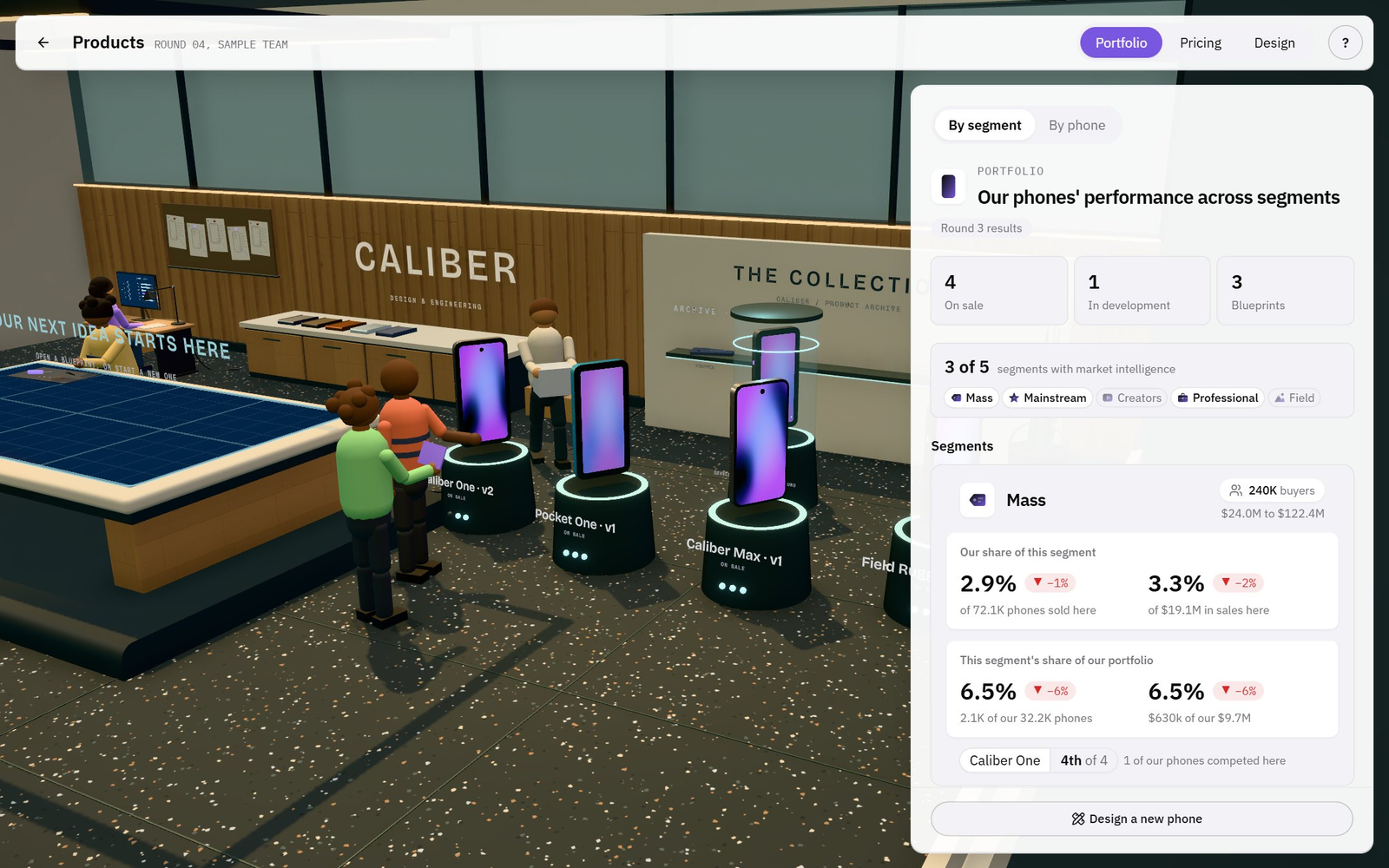
What students run
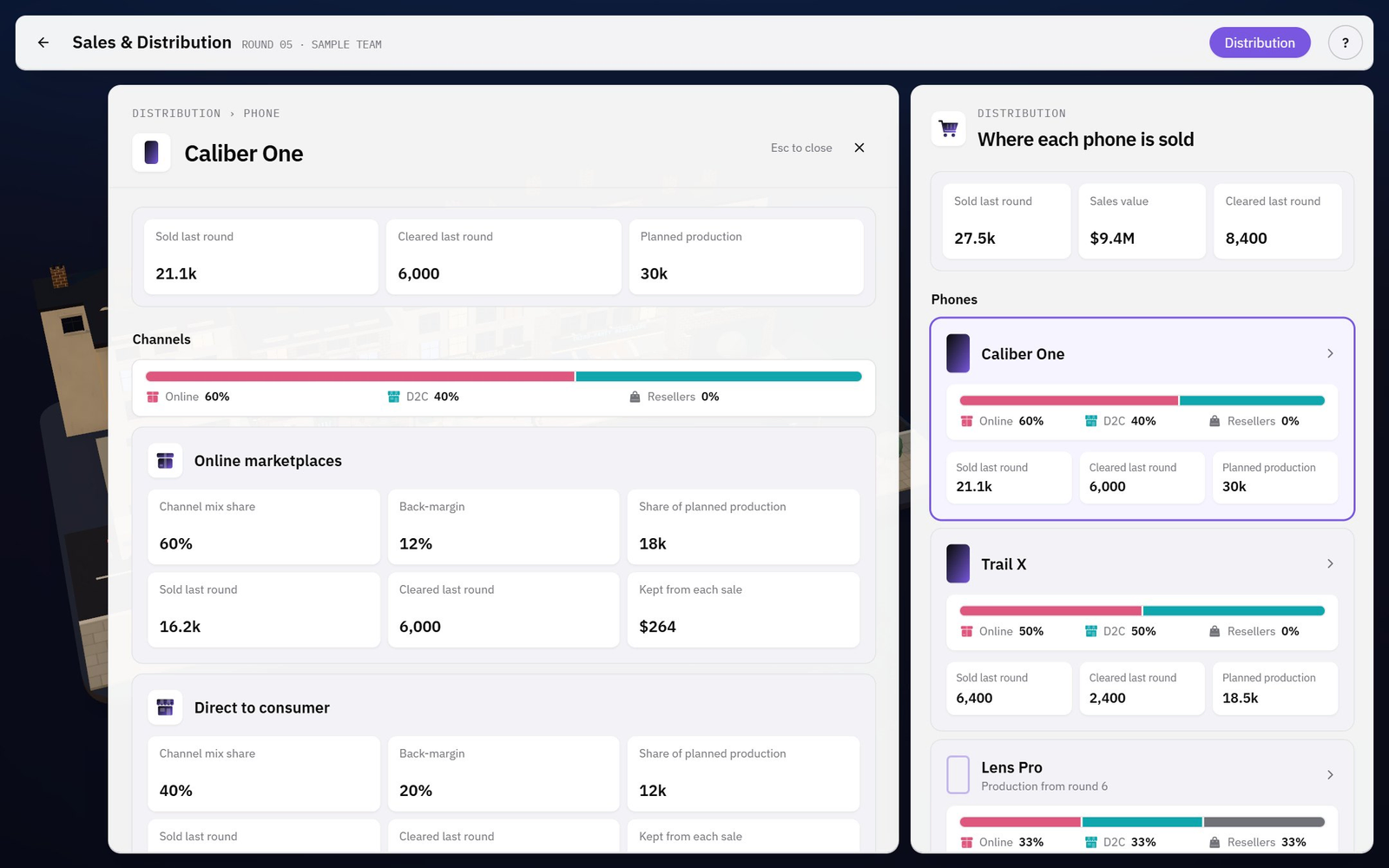
Products: The phones you sell, and their prices.Supply Chain: Where parts come from, and when.Factory: How much you build, and how well.Marketing: Campaigns and brand.Sales & Distribution: Where each phone is sold, and what channels keep.Finance: Where money comes from and goes.
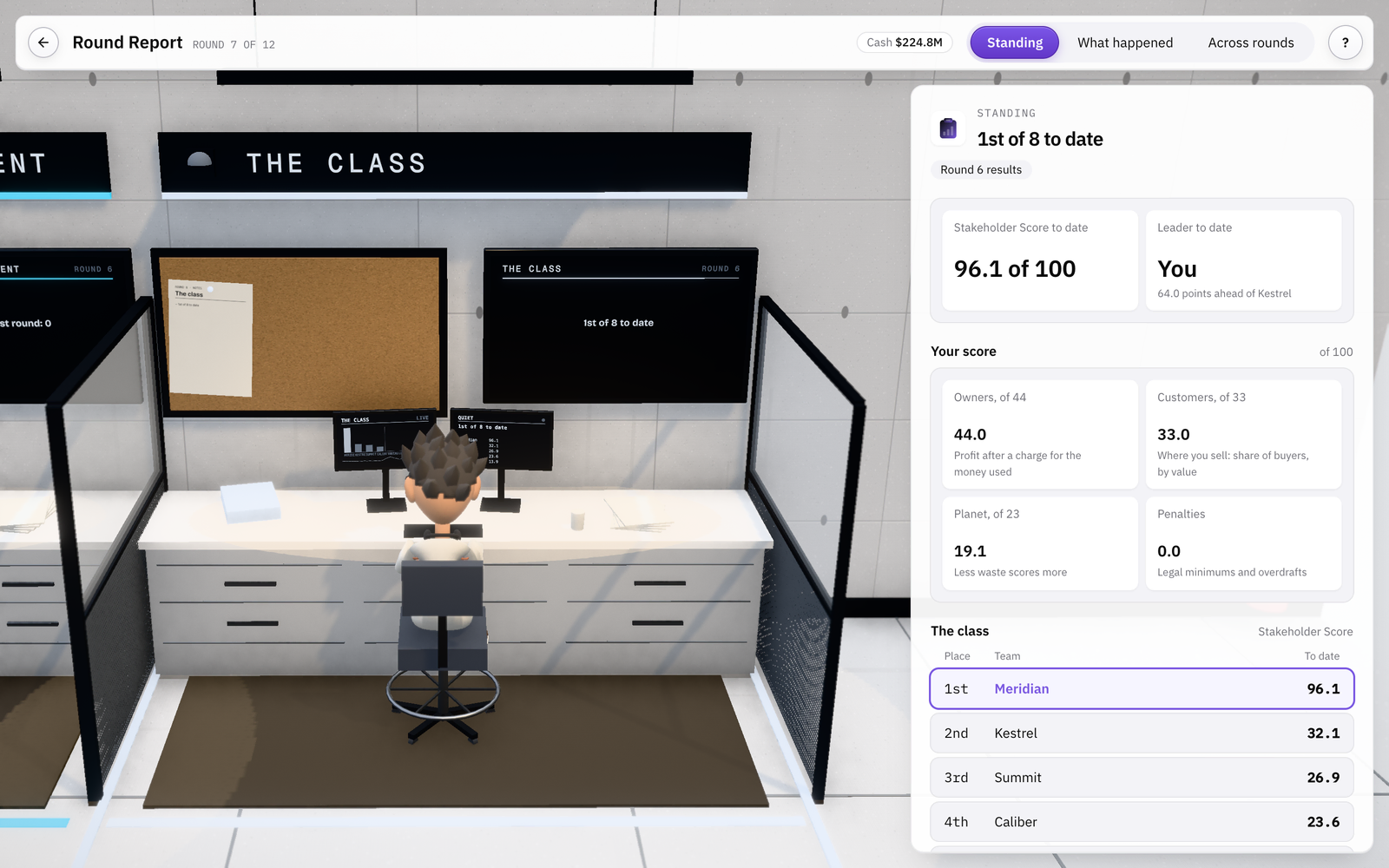
What the teacher gets back
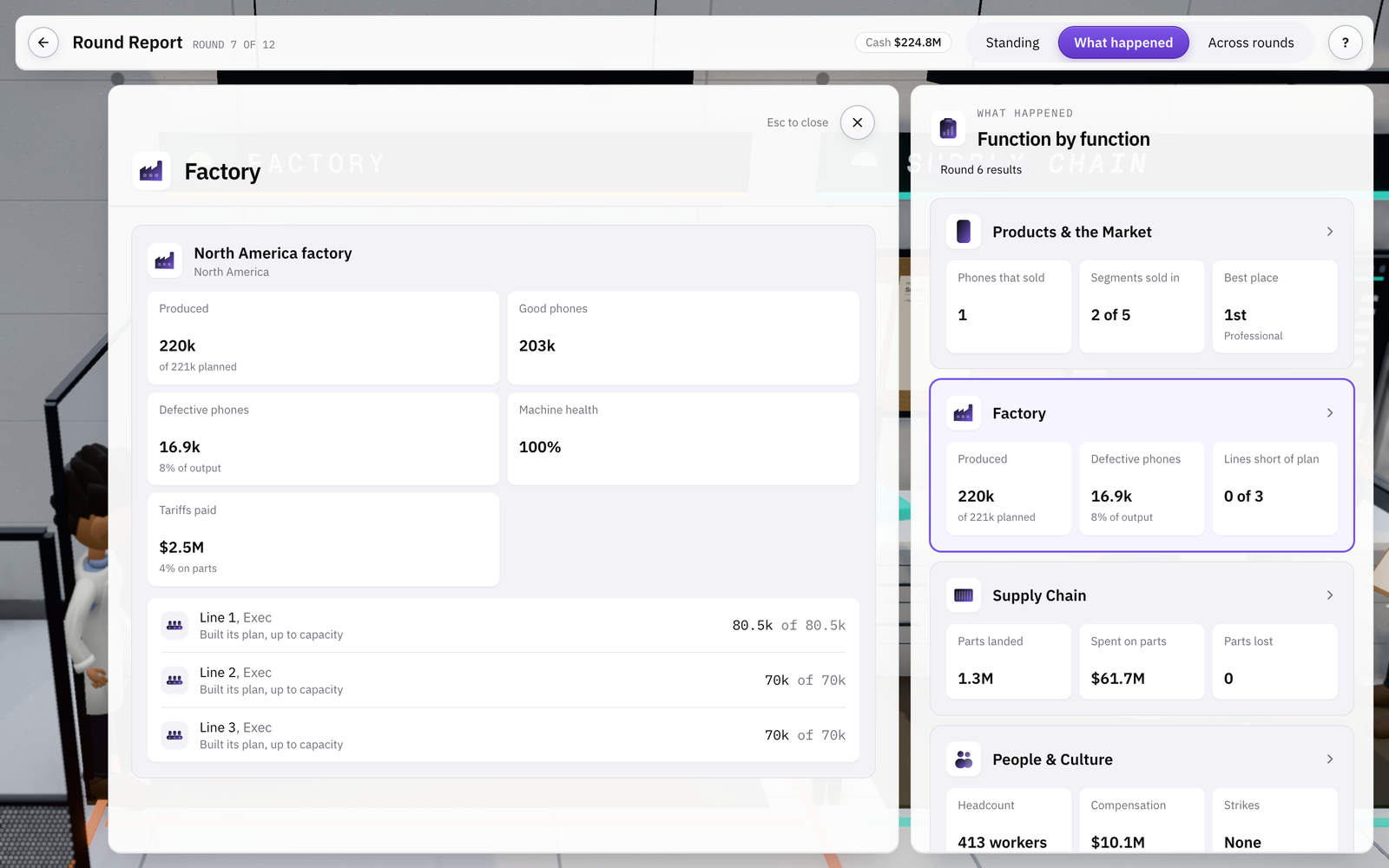
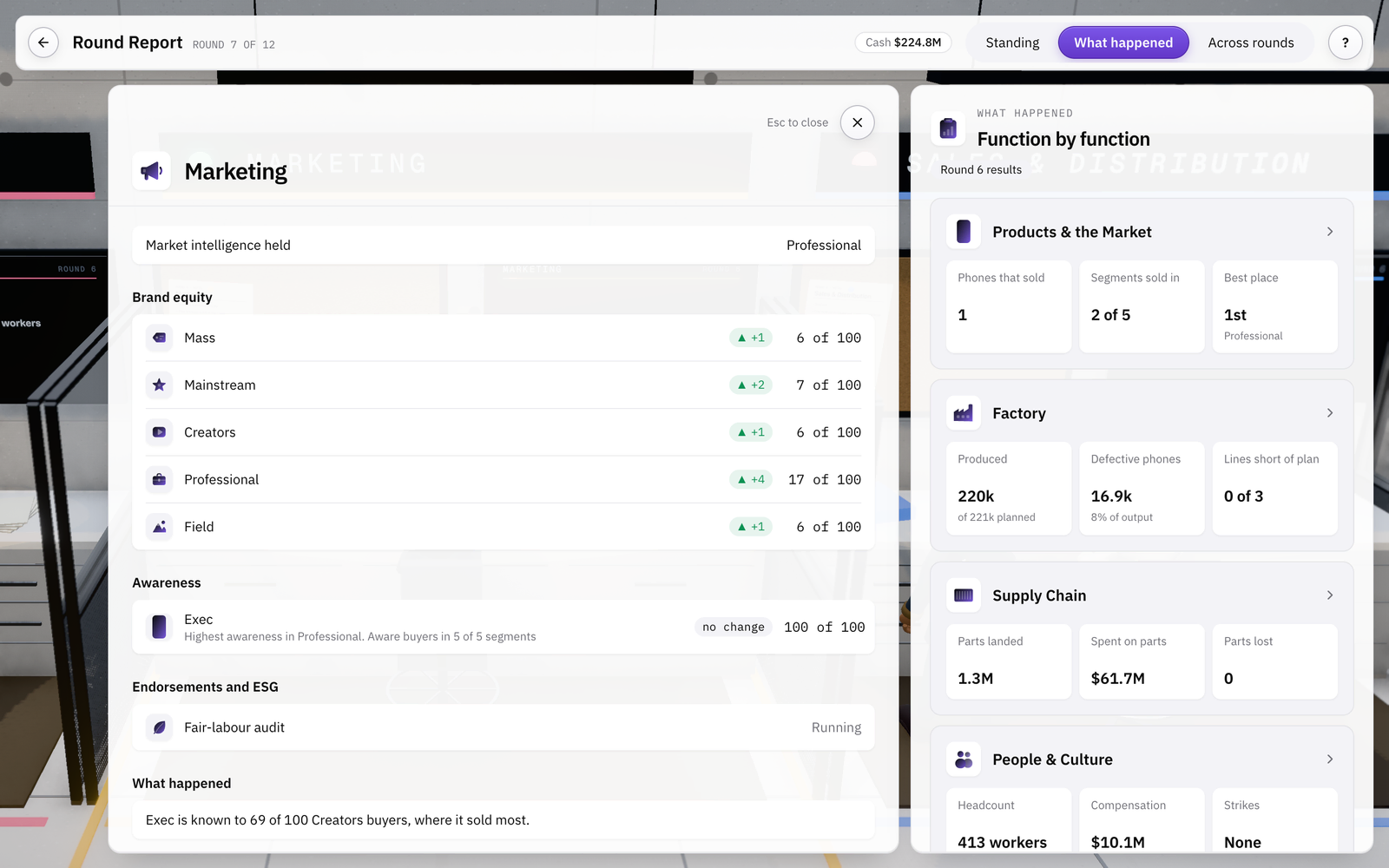
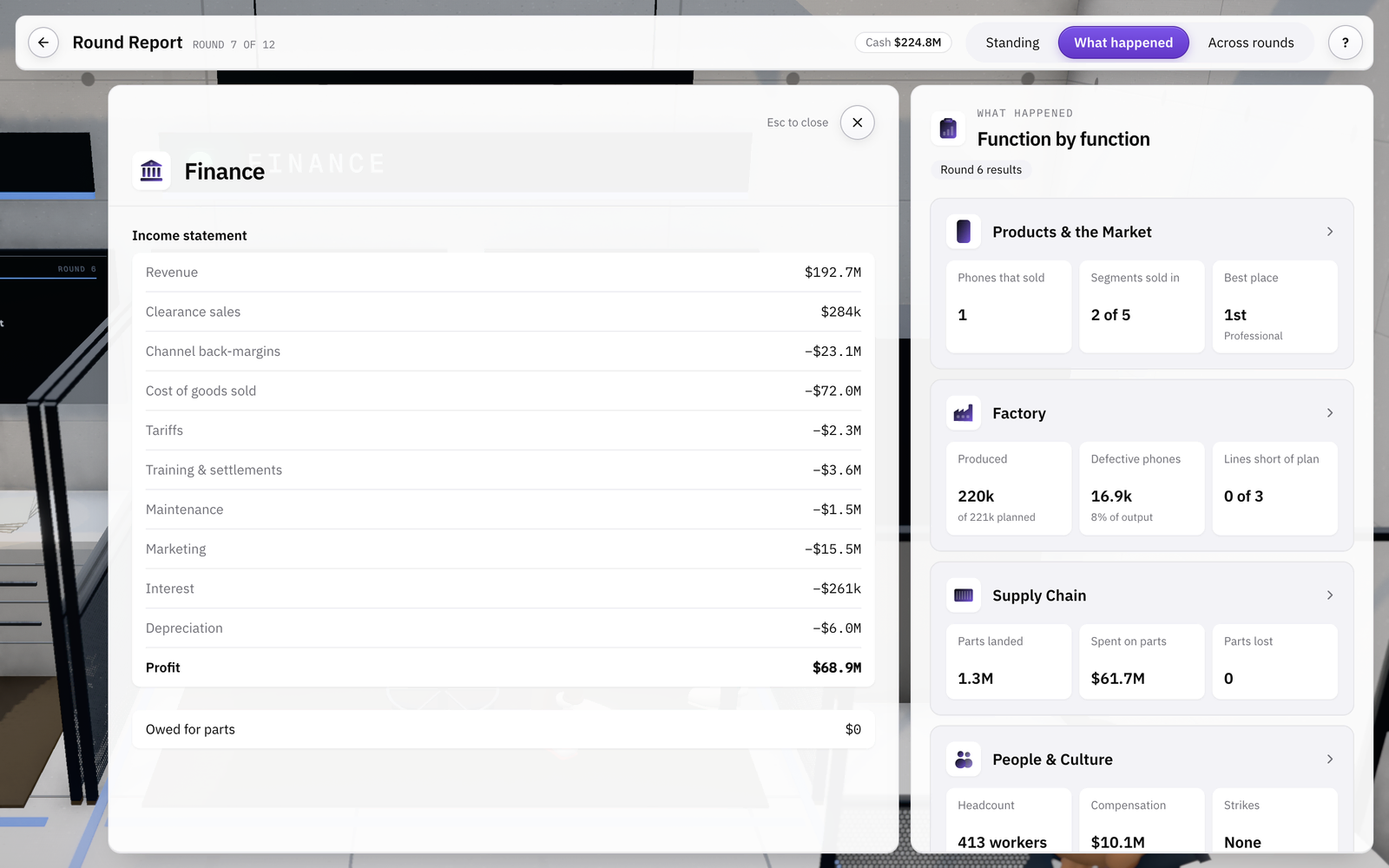
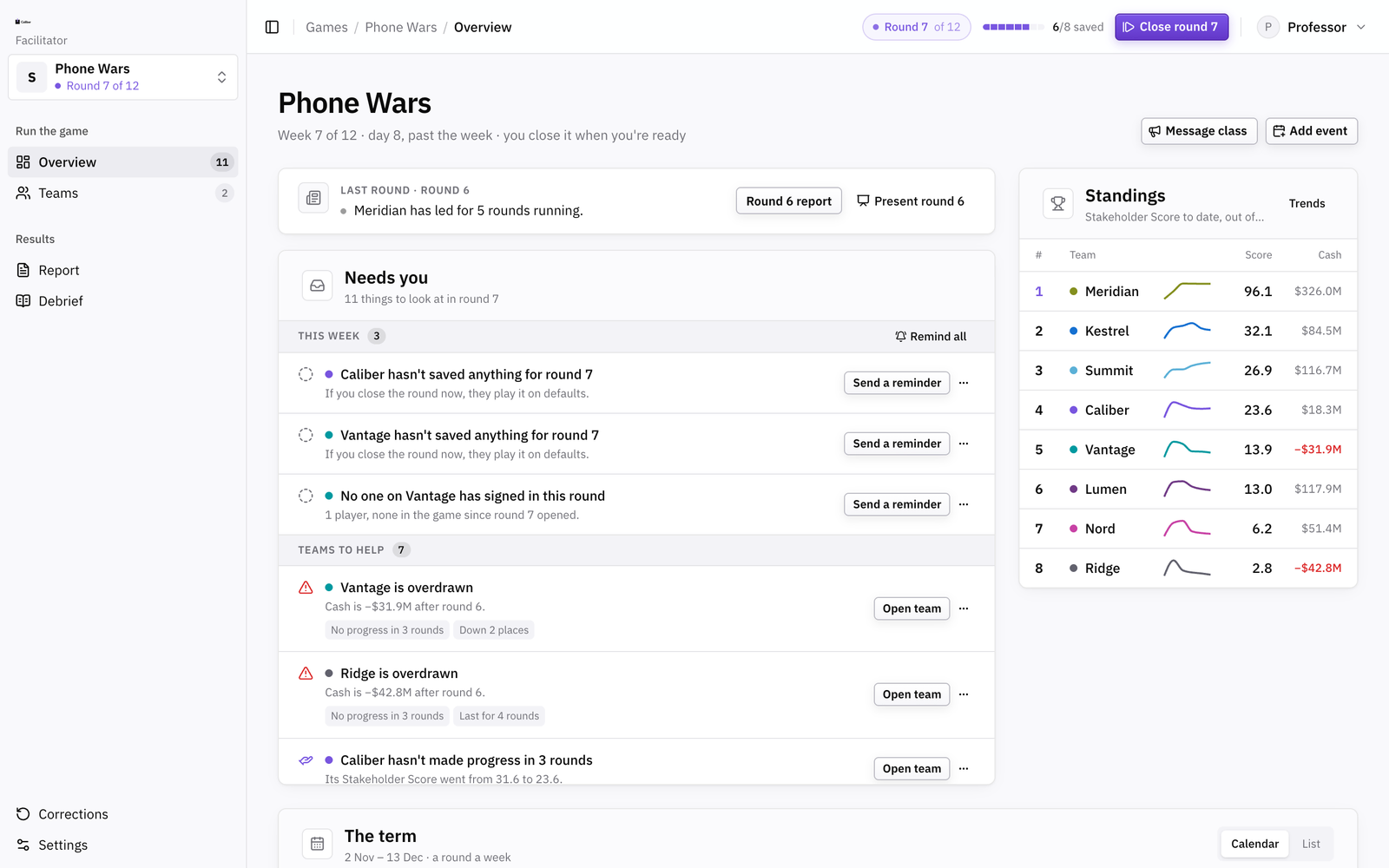
Standing: Where every team stands to date, ranked on the Stakeholder Score.What happened: The round function by function: phones sold, production, defects, parts landed and the People & Culture figures.Across rounds: Profit, the Stakeholder Score and place to date, round by round.The Overview: who needs you, the standings on the Stakeholder Score, and the term with its events.




Three ways to run it in your school.
A single lesson
One lesson · about 3 rounds
Single player, against bot teams
Each student runs a company in a game of their own, against bot teams the game plays. You set up a game for each student before the lesson and close each game's rounds, so it suits a small group.
Best forA single lesson, or an individual assessment of how each student decides.
A topic unit
2 or 3 weeks · about 4 to 6 rounds
In teams or single player
Teams, or students on their own, run the whole company over a few weeks, one class a round, opening with the report and ending with the close.
Best forA unit on one topic, such as marketing or money, with your debrief kept to it.
A full course
A term · about 6 to 8 rounds
In teams or single player
Students run all eight departments, in teams or alone, one round a week. About half an hour to set up, then about an hour a week, mostly in class, where you present last round's report and close the next.
Best forA business studies or economics course.


What changes when the lesson is Caliber.
A case on paper asks students what they would decide. In Caliber, each team, or each student alone, runs a company and sees next round what its decisions did.
| What changes | The usual lesson | Caliber |
|---|---|---|
| What students see | A case on paper. | A company they run, in a 3D campus. |
| What a decision costs | A mark. | A result next round, in their own company's numbers. |
| What the teacher gets back | Answers to mark. | A report of every team's round, ready to present. |
| Setting up | Lesson plans to write. | About half an hour for a class game. |
| Who plays | The whole class, one case. | Alone or in teams, and every save shows which student made it. |
| How long it runs | One lesson. | A lesson, a unit or a term, from the same game. |
| What it covers | One topic at a time. | Every department of a company, in one game. |
