
Leadership, practised on a real company.
Caliber is a business simulation by Flex Labs for business acumen and leadership training in companies in the UAE, Egypt and Saudi Arabia. Employees run a phone company in teams, single player or as a single-player assessment, and the facilitator reads a skills report for each person.

A company to run, with the trade-offs of a real one.
Each round, a team weighs price against volume and pay against cost across the eight departments of one company. The result is ranked on the Stakeholder Score, which counts what a team gives its owners, its customers and the planet.
The nine skills Insights reads
- Financial sense
- Customer and market focus
- Strategic consistency
- Planning ahead
- People and stakeholders
- Risk judgement
- Adapting
- Using data
- Teamwork
What you get back
- The round's report for every team, after every close
- Nine skills for each team and each person
- Each skill as a band, with the moments behind it
- Each skill against the game's bots, or the other teams
- Each player's share of the team's decisions
- "For development, not selection": each player sees their own report first
Business acumen workshop
1 to 3 days · about 4 to 8 rounds
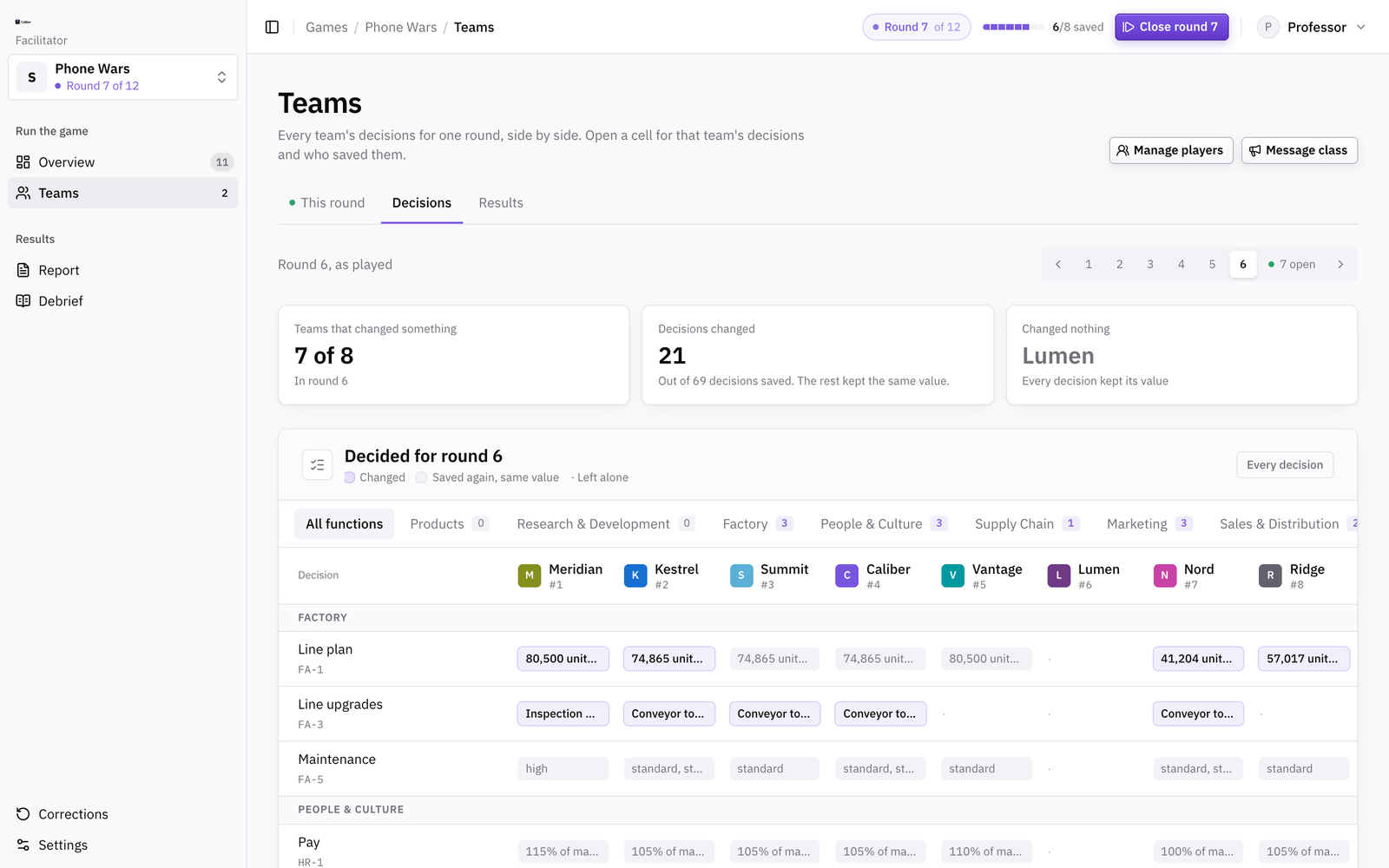
In teams or single player
Teams or single players share one market, several rounds a day, with you in the room. Teams decide, you close the round, and you debrief it before the next.
Best forA leadership programme, an onboarding cohort or an offsite.
Development programme
6 to 10 weeks · a round a week
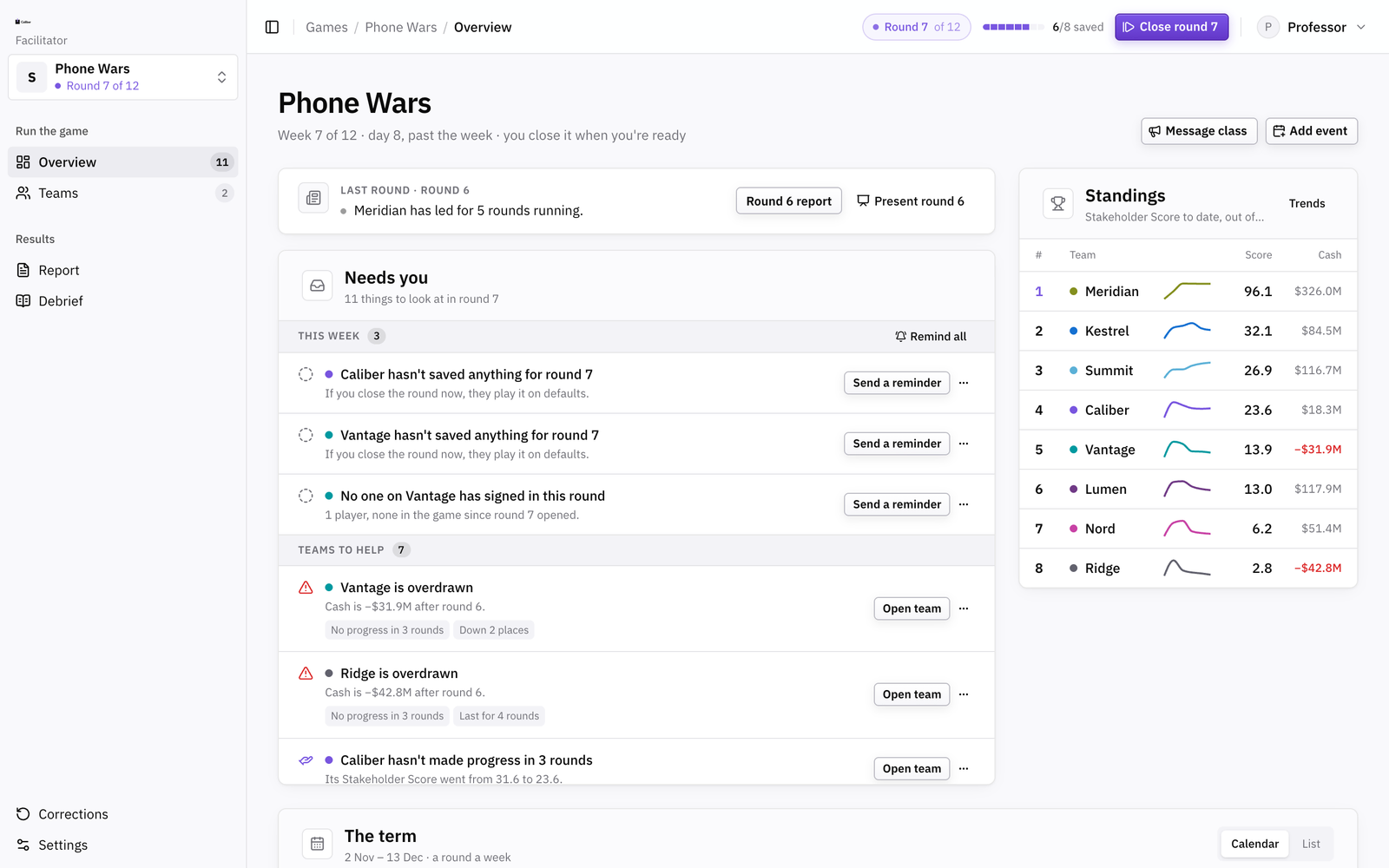
In teams or single player
Each person, or each team, runs a company a round a week. You close each round when the week ends, and every team gets its Round Report.
Best forUpskilling managers, or a cohort spread across sites.
Individual assessment
One sitting · about 3 to 4 rounds
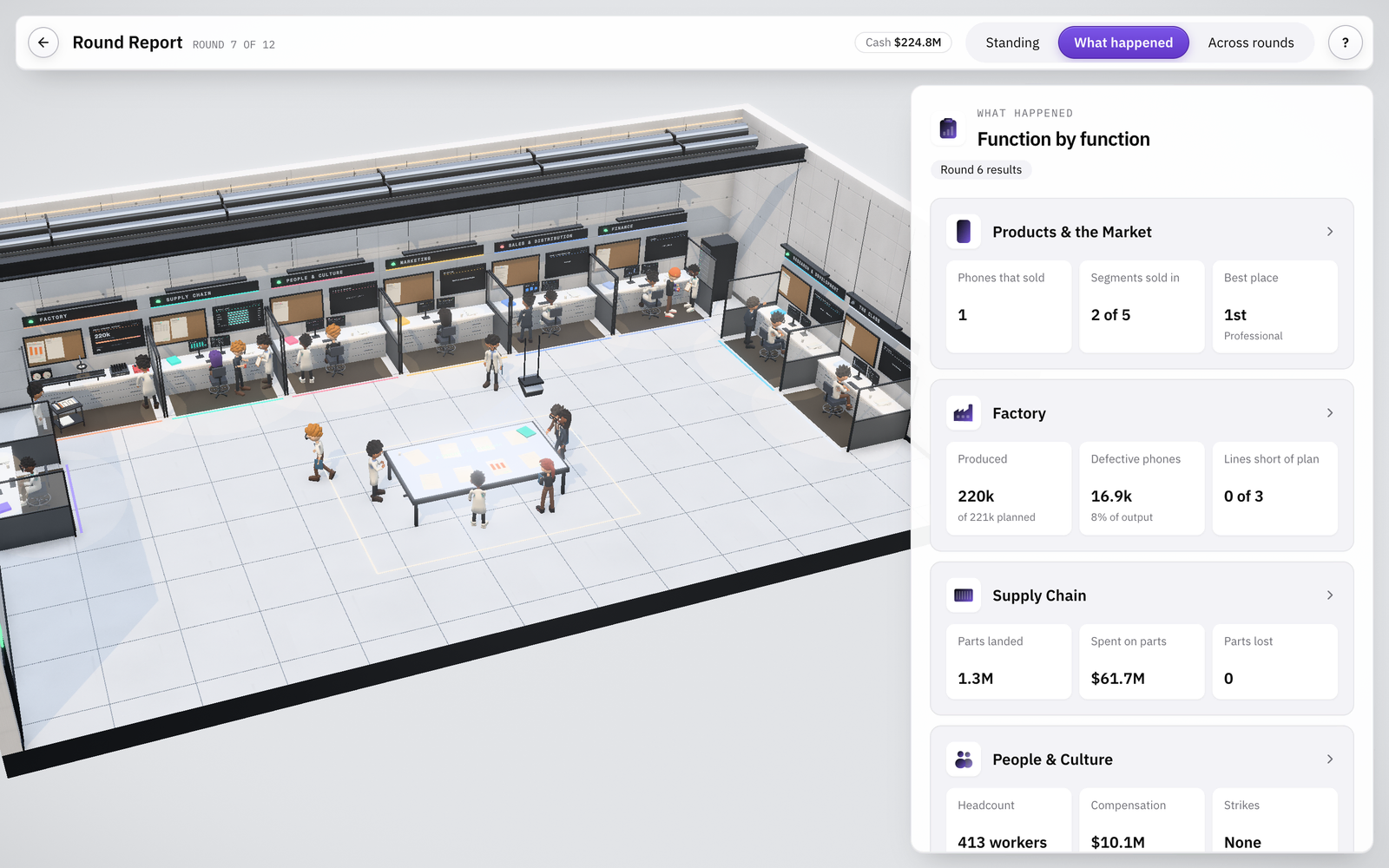
Single player, against bot teams
Each person runs a company alone against bot teams, for about 3 to 4 rounds. You read each person's skills report in the Control Panel (eight skills; Teamwork needs a team), then talk it through with them. You set up and close a game of their own for each person.
Best forA development centre, or the start of a programme.

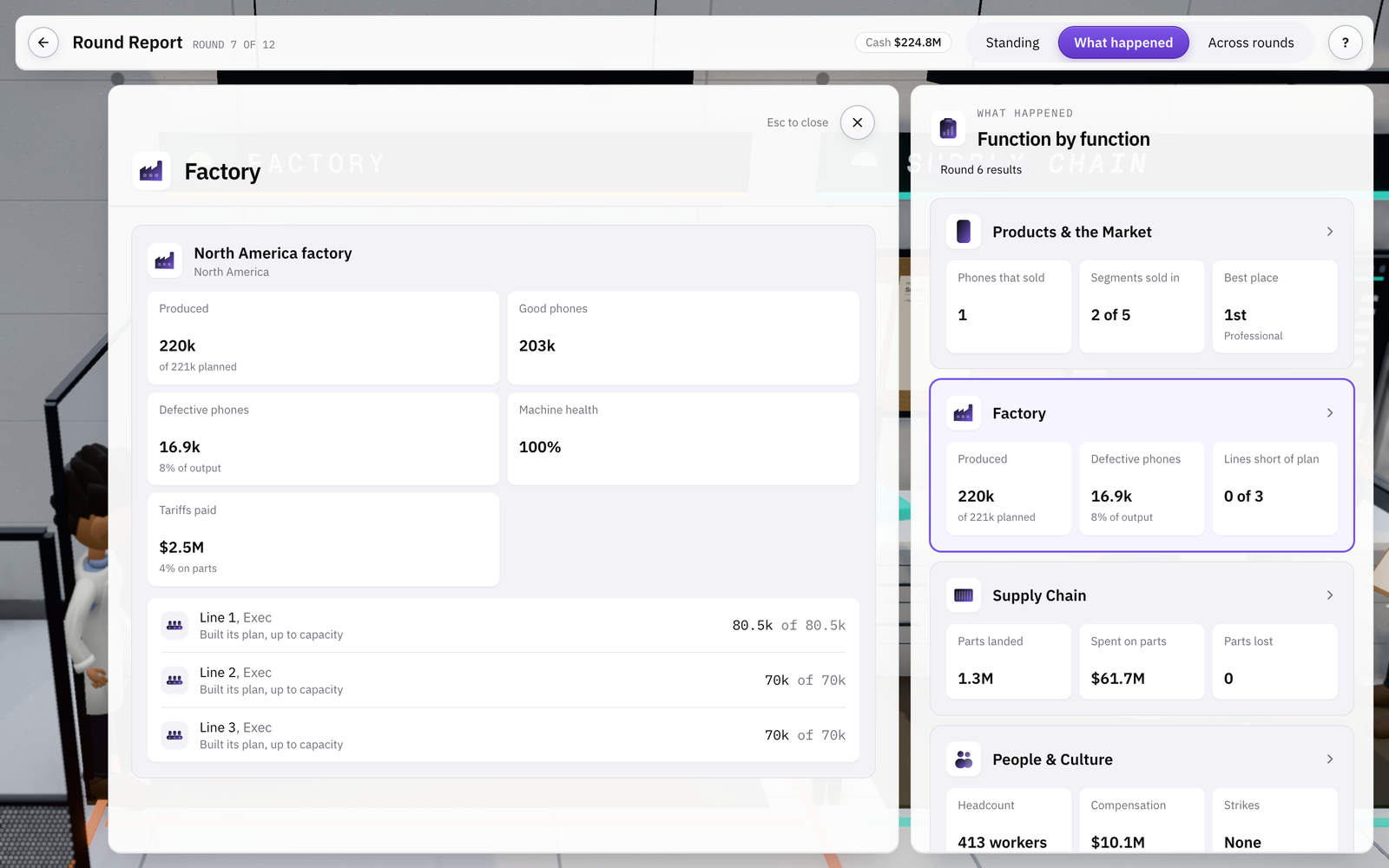
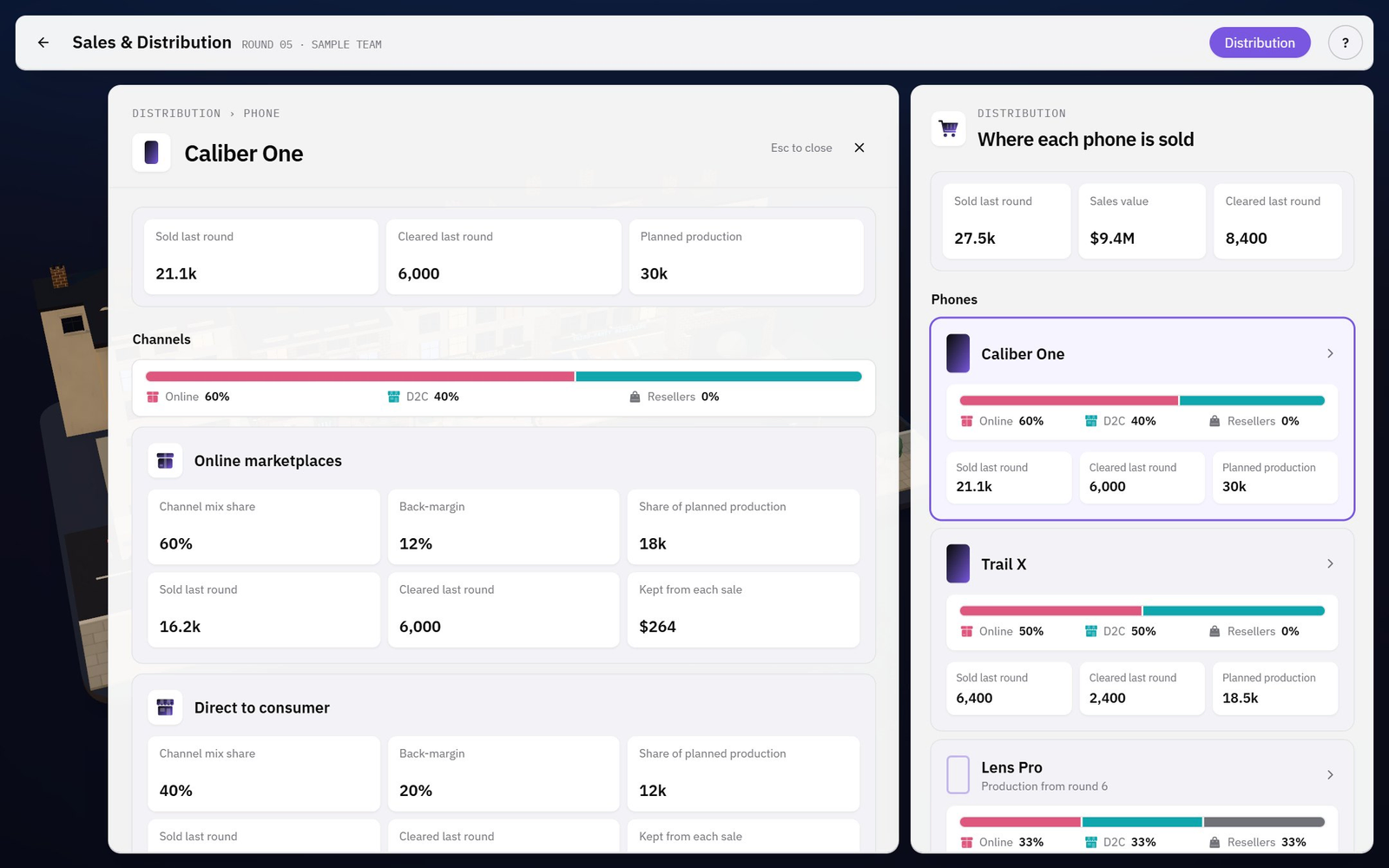
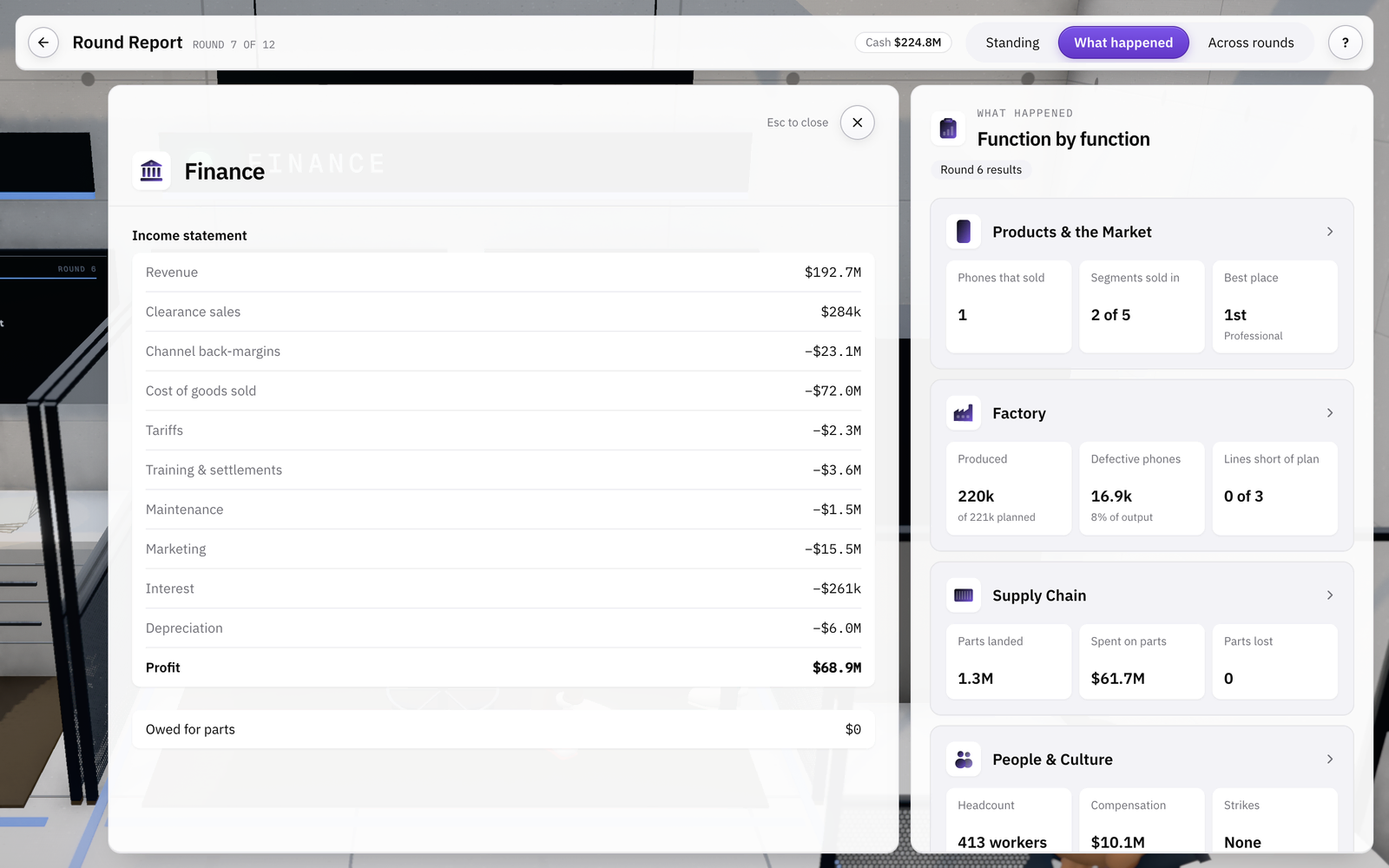


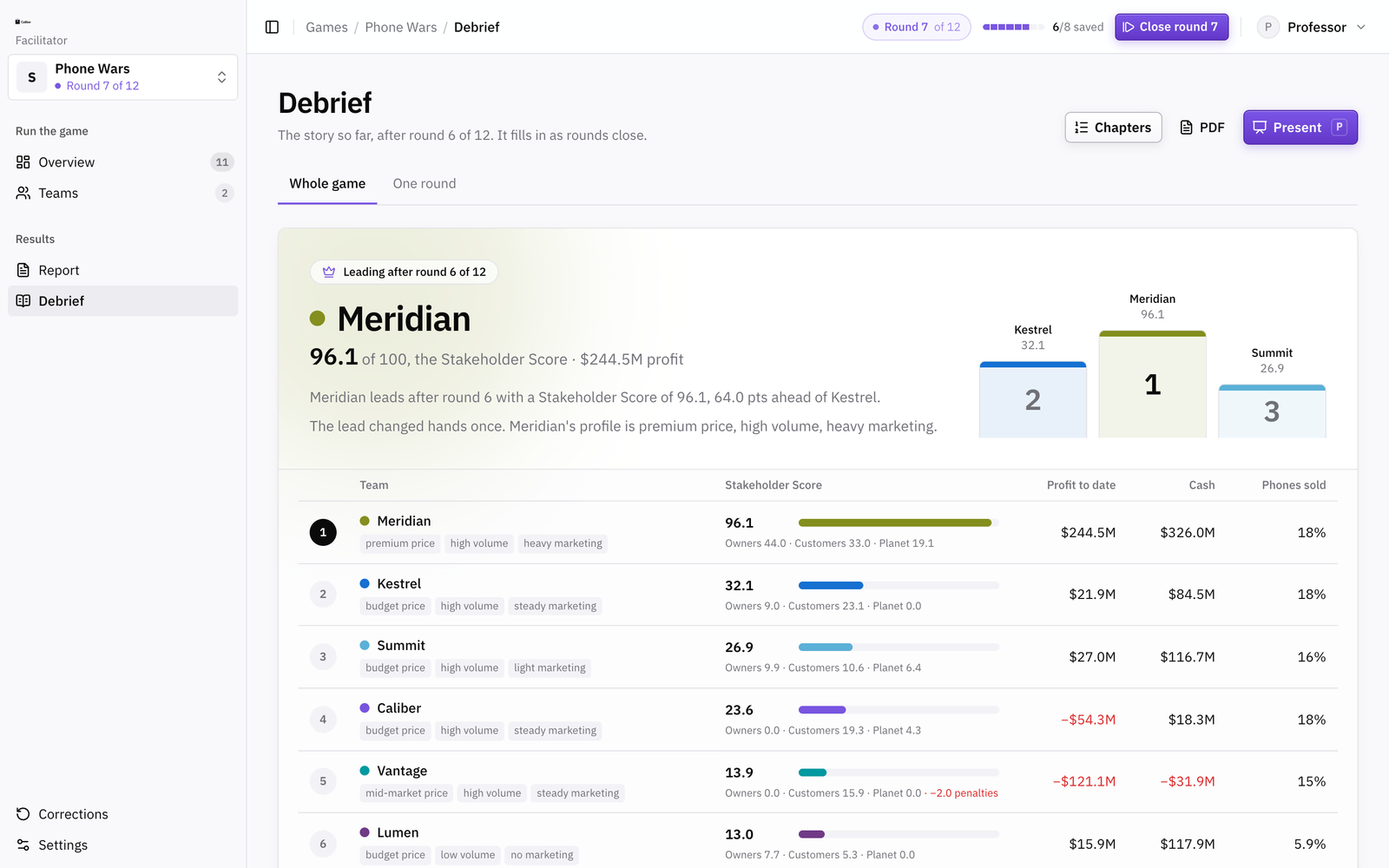
What changes when the training is Caliber.
Corporate courses are often taught by presentation, discussion and case work, then checked with a quiz. In Caliber, people run a company, and each round's results come from their own decisions.
| What changes | The usual training | Caliber |
|---|---|---|
| What people do | Presentations, discussion and case work. | Run a company and see what each round's decisions did. |
| What you can measure | Attendance, completion and quiz scores. | Every decision, per person, and nine skills in bands. |
| Length | Set when the course is designed. | One to three days, or weeks alongside the job. |
| What comes back | Feedback forms and quiz results. | The round's report for every team, and a skills report per person to talk through. |
| What people see | Slides and a workbook. | A 3D campus: the studio, the factory, the market, every department in view. |
| Teams or alone | Mostly group exercises in the room. | In teams, single player or as a single-player assessment, from the same game. |
| Setting up | Course design, often with a training provider. | About half an hour for a class game: rounds, cash, then every person by email. |
